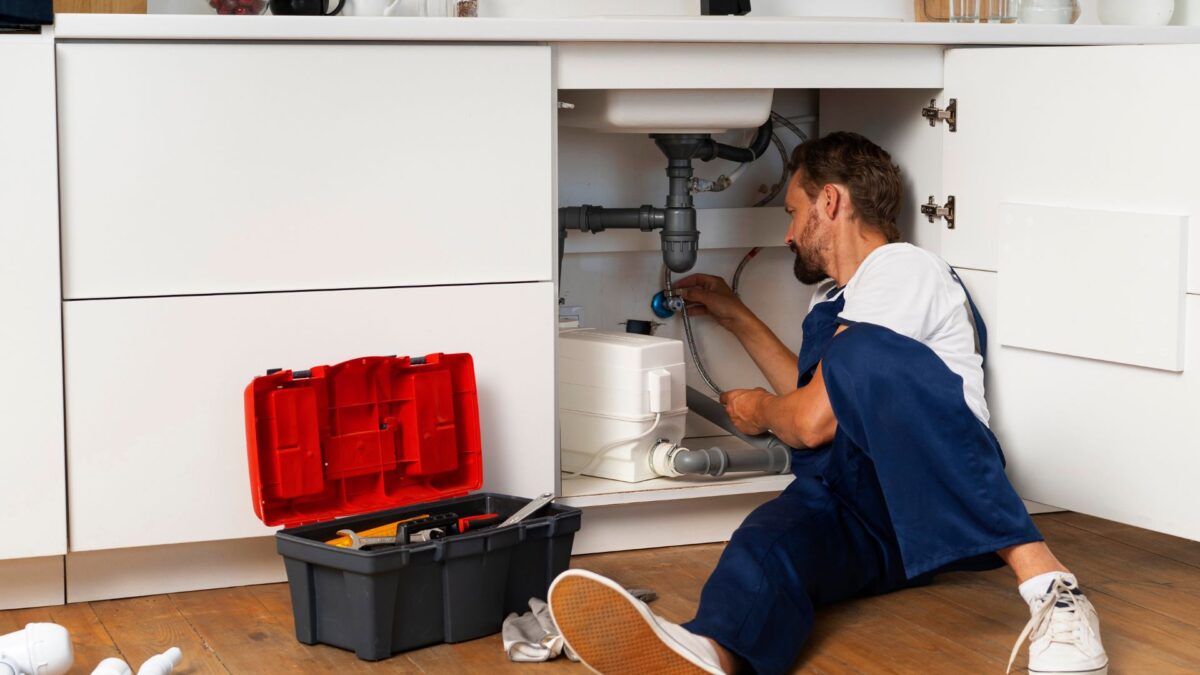
A bad plumber doesn’t just cost you money — they can flood your basement, contaminate your drinking water, or leave behind code violations that surface when you try to sell your home. This guide gives you a systematic, expert-level framework for finding a trustworthy plumber, whether you need a routine repair, a complex renovation, or someone at your door at 2 AM with a burst pipe.
Table of Contents
- Why Choosing the Right Plumber Matters More Than You Think
- Types of Plumbing Work — And Why Your Hiring Criteria Should Change for Each
- Licensed vs. Unlicensed Plumber: What’s Actually at Stake
- Master Plumber vs. Journeyman vs. Apprentice: Who Should Be Doing Your Work?
- 8 Proven Ways to Find a Good Plumber in Your Area
- How to Read Plumber Reviews Without Getting Misled
- The 15-Point Vetting Checklist: How to Choose a Good Plumber
- 22 Questions to Ask a Plumber Before You Hire Them
- Understanding Plumber Pricing: Flat Rate vs. Hourly, Estimates vs. Quotes
- Realistic Plumbing Cost Benchmarks (2026 Data)
- How to Find an Emergency Plumber Without Getting Ripped Off
- Red Flags & Scam Tactics Every Homeowner Must Recognize
- What to Expect on the Day of Service
- How to Evaluate a Plumber’s Work Quality (Even If You’re Not a Plumber)
- Warranties, Guarantees & What to Do When Something Goes Wrong
- Plumbers, General Contractors & Home Warranty Companies: Knowing the Difference
- Modern Plumbing Technology a Good Plumber Should Offer
- How to Build a Long-Term Relationship with a Reliable Plumber
- Frequently Asked Questions
- Final Checklist: Choosing & Hiring the Right Plumber
1. Why Choosing the Right Plumber Matters More Than You Think
Plumbing is one of the few trades where a bad job doesn’t just mean aesthetic disappointment — it means genuine health risks, structural damage, and potential legal liability.
Consider what’s at stake:
- Water damage is the single most common homeowner insurance claim in the United States. A poorly installed supply line or improperly connected fitting can release hundreds of gallons of water into your home in minutes.
- Contaminated drinking water can result from improper backflow prevention, wrong pipe materials, or cross-connections between potable and non-potable systems.
- Code violations from unpermitted or substandard work can surface during a home sale inspection, killing deals, reducing your home’s value, or requiring expensive remediation.
- Gas line work done incorrectly is a life-threatening hazard. Many licensed plumbers are also certified for gas line installation and repair.
- Sewer line mistakes can result in sewage backing up into your home, mold growth, or environmental violations.
The difference between a good plumber and a bad one isn’t just the quality of the repair. It’s the difference between a problem solved and a catastrophe created.
And yet, most homeowners spend more time researching a new television than they do vetting the person who’s about to open up the walls of their home.
2. Types of Plumbing Work — And Why Your Hiring Criteria Should Change for Each
One of the biggest mistakes homeowners make is treating all plumbing jobs the same when looking for a plumber. The level of expertise, licensing, insurance, and vetting you need varies dramatically based on what you’re hiring for.
Tier 1: Routine Repairs & Maintenance (Lower Risk)
Examples: Dripping faucet, running toilet, slow drain, garbage disposal replacement, faucet installation, showerhead replacement, hose bib repair.
What you need: A licensed plumber with good reviews and fair pricing. This tier doesn’t require extensive vetting — but licensing and insurance are still non-negotiable.
Typical cost range: $150–$500
Tier 2: Moderate Complexity Projects (Moderate Risk)
Examples: Water heater replacement, water softener installation, re-routing a single drain line, fixing a slab leak, tankless water heater conversion, bathroom fixture rough-in.
What you need: A licensed plumber with specific experience in the exact type of work. For example, tankless water heater installation requires different skills (and potentially gas line certification) than a standard tank swap. References for similar projects are important at this tier.
Typical cost range: $500–$5,000
Tier 3: Major Projects (High Risk, High Investment)
Examples: Whole-house repipe, sewer line replacement, bathroom or kitchen renovation plumbing, new construction plumbing, gas line installation, radiant floor heating, main line backflow preventer installation.
What you need: A master plumber or highly experienced journeyman with extensive project-specific references, proper permits pulled, detailed written estimates, warranty documentation, and ideally coordination experience with general contractors and inspectors.
Typical cost range: $3,000–$25,000+
Tier 4: Emergency Response (Highest Urgency)
Examples: Burst pipe, sewer backup, gas leak, water heater failure flooding, no water in the house.
What you need: Availability right now — but with enough baseline vetting to avoid panic-driven hiring of an unqualified or predatory service provider. (See Section 11 for the emergency-specific framework.)
Typical cost range: $300–$3,000+ (including after-hours premiums)
Key Takeaway: Match your vetting intensity to the risk level. You don’t need to spend three days researching someone to fix a running toilet. But if you’re repiping your entire house, you should vet your plumber as thoroughly as you’d vet a surgeon.
3. Licensed vs. Unlicensed Plumber: What’s Actually at Stake
This isn’t bureaucratic red tape. A plumber’s license represents verified knowledge, tested competence, and regulatory accountability. Here’s what it means in practice:
What a Plumbing License Requires (Varies by State)
| Requirement | Typical Standard |
| Formal education or apprenticeship | 2–5 years of supervised work under a licensed plumber |
| Examination | Written and/or practical exam covering plumbing codes, safety, system design, and installation techniques |
| Continuing education | Ongoing training to maintain the license (code updates, safety protocols, new materials) |
| Background check | Required in most states |
| Insurance requirements | Most states require licensed plumbers to carry liability insurance |
What Happens When You Hire an Unlicensed Plumber
- Your homeowner’s insurance may deny claims for water damage caused by unlicensed work.
- Permits cannot be pulled without a license, meaning the work is done illegally and won’t be inspected.
- You have limited legal recourse if something goes wrong. Unlicensed operators often work without a business entity, making lawsuits difficult or pointless.
- The work may not meet code, creating safety hazards and complications when you sell the home.
- Warranties on fixtures and equipment may be voided if installed by an unlicensed person.
How to Verify a Plumber’s License
Every state maintains a contractor licensing database — typically accessible online through the state’s contractor licensing board, department of consumer affairs, or equivalent agency. Some cities and counties have additional licensing requirements.
Steps:
- Ask the plumber for their license number.
- Visit your state’s licensing board website.
- Search the license number and verify: active status, license type, any disciplinary actions, insurance status.
- If your state doesn’t have online lookup, call the licensing board directly.
No exceptions. Even for a “small job.” Even for your neighbor’s cousin who “does plumbing on the side.” A license is the minimum bar for competence and accountability.
4. Master Plumber vs. Journeyman vs. Apprentice: Who Should Be Doing Your Work?
Not all licensed plumbers have the same level of expertise. Understanding the hierarchy helps you ensure the person actually doing the work in your home is qualified for the complexity of the job.
Apprentice Plumber
- Experience: 0–4 years
- Status: In training; must work under direct supervision of a journeyman or master plumber
- Can they work in your home? Only under supervision. They should never be the sole person on a job.
- Appropriate for: Assisting on any job, but shouldn’t be the lead
Journeyman Plumber
- Experience: Typically 4–5+ years, having completed an apprenticeship and passed the journeyman exam
- Status: Fully licensed to perform plumbing work independently
- Can they work in your home? Yes, independently
- Appropriate for: Most residential plumbing work, including Tier 1, 2, and many Tier 3 projects
Master Plumber
- Experience: Typically 7–10+ years, with additional examination and often business management training
- Status: Highest level of plumbing licensure; can design plumbing systems, pull permits, train apprentices, and supervise other plumbers
- Can they work in your home? Yes, and they’re the most qualified to do so
- Appropriate for: Complex projects, system design, new construction, major renovations
What You Should Ask
When a plumbing company sends someone to your home, ask: “What is this technician’s license level?” For routine work, a journeyman is perfectly qualified. For major projects — especially those involving system design, code compliance complexity, or gas lines — request a master plumber or confirm a master plumber has designed and will supervise the work.
Many reputable plumbing companies employ a mix of all three levels. What matters is that the right person is assigned to the right job and that an apprentice is never left unsupervised in your home.
5. 8 Proven Ways to Find a Good Plumber in Your Area
Before you can vet a plumber, you need a list of candidates to vet. Here are the most effective sourcing methods, ranked by reliability:
1. Personal Referrals from Homeowner Friends and Neighbors
This remains the single most reliable sourcing method. When someone you trust says, “This plumber did great work at a fair price,” that recommendation is worth more than 50 five-star Google reviews. Ask specifically:
- What work was done?
- Was it completed on time and on budget?
- How was communication?
- Would they hire this plumber again?
2. Referrals from Other Trusted Tradespeople
If you have a relationship with a reliable electrician, HVAC technician, or general contractor, ask who they recommend. Tradespeople know which plumbers do quality work and which ones cut corners — they see each other’s work regularly.
3. Local Real Estate Agents
Experienced agents maintain vetted lists of reliable contractors and plumbers. They have strong incentive to recommend quality — bad referrals damage their reputation and their clients’ transactions.
4. Your Local Building Department / Permit Office
Call your local building inspector’s office and ask (off the record) which plumbing companies consistently pass inspections without issues. Inspectors won’t give formal endorsements, but many will point you in the right direction — or at least tell you who to avoid.
5. Professional Association Directories
- Plumbing-Heating-Cooling Contractors Association (PHCC)
- United Association of Plumbers and Pipefitters (UA)
- Your state’s plumbing contractors association
- Local Chamber of Commerce
Membership in professional associations doesn’t guarantee quality, but it indicates a level of professionalism and commitment to the trade that fly-by-night operators don’t bother with.
6. Online Platforms (With Heavy Vetting)
- Google Business Profile (check reviews, response patterns, and photos)
- Yelp (filter for “Recommended Reviews” — see Section 6 for how to read reviews critically)
- Angi (formerly Angie’s List) (paid membership once increased quality; now free, so filter more carefully)
- Nextdoor (neighborhood-specific recommendations carry more weight)
- HomeAdvisor (use as a lead source, but vet independently)
- BBB (Better Business Bureau) (check complaint history more than rating)
Critical warning: Do NOT simply Google “plumber near me” and call the first paid ad result. Those positions are purchased, not earned. Many legitimate plumbing companies don’t invest in paid search advertising. Conversely, some companies that appear in top ad positions are lead-generation services that sell your information to multiple plumbers — not actual plumbing companies.
7. Your Home Insurance Company’s Referral List
Many insurers maintain preferred contractor networks. While these plumbers aren’t necessarily the cheapest, they’ve typically been vetted for licensing, insurance, and claims history.
8. Local Hardware Store Staff
This sounds old-fashioned. It works. Staff at independent hardware stores (not big-box chains) often know the local trades community intimately. They see who buys quality materials and who buys the cheapest option available.
How Many Candidates Do You Need?
- For Tier 1 (routine repairs): 1–2 solid candidates
- For Tier 2 (moderate projects): 2–3 candidates with estimates
- For Tier 3 (major projects): At least 3 detailed bids with thorough vetting of each
6. How to Read Plumber Reviews Without Getting Misled
Online reviews are valuable — but only if you know how to interpret them. Here’s a practical framework for reading plumbing reviews critically:
Green Flags in Reviews
- Specificity. Reviews that describe the exact work performed, the plumber’s communication, pricing fairness, and job cleanliness are more trustworthy than generic “Great service!” reviews.
- Mentions of problem resolution. “They came back the next day to fix an issue at no charge” tells you more about a company’s character than 100 five-star ratings.
- Consistent themes across multiple reviews. If 15 different reviewers mention “on time,” “clean work area,” and “fair price,” that’s a reliable pattern.
- Responses to negative reviews. How a plumbing company responds to criticism reveals their professionalism. Look for acknowledgment, accountability, and solutions — not defensiveness or blame.
- Photo documentation. Reviews with before/after photos indicate real customers sharing genuine experiences.
Red Flags in Reviews
- Suspiciously perfect profiles. A company with 500 five-star reviews and zero negative ones is statistically improbable. Some reviews may be purchased or incentivized.
- Clusters of reviews posted in a short period. Twenty reviews appearing in one week often indicates a review-generation campaign, not organic customer feedback.
- Generic, vague language. “Best plumber ever! Highly recommend!” with no details is worthless for evaluation purposes.
- Reviewer profiles with only one review. Single-review accounts are the most commonly fabricated.
- The company never responds to reviews. While not disqualifying, a total lack of engagement suggests either apathy or absence of management oversight.
The Review Math That Actually Matters
Don’t fixate on the star rating. Instead, look at the overall pattern:
- A company with a 4.3 rating from 200 reviews with thoughtful responses to complaints is almost always more trustworthy than a company with a 5.0 rating from 12 reviews.
- Read the most recent 2- and 3-star reviews first. They typically contain the most useful, balanced information.
- Check the company’s reviews across multiple platforms (Google, Yelp, BBB, Facebook). Consistency across platforms is a strong reliability signal.
Pro Tip: If a plumbing company’s Google Business Profile shows photos of their trucks, team, and completed work — and those photos match the company’s website — that’s a strong signal of a legitimate, established business. Companies that don’t even have a verifiable physical presence or team photos warrant extra caution.
7. The 15-Point Vetting Checklist: How to Choose a Good Plumber
This is the core framework. Use it systematically for any plumbing hire above a basic service call.
Non-Negotiable Qualifications (Must Pass All)
- 1. Active, valid plumbing license — Verified through your state’s licensing board, not just the plumber’s verbal claim.
- 2. General liability insurance — Minimum $500,000 coverage. Protects you if they damage your property.
- 3. Workers’ compensation insurance — If they or their employees are injured on your property without workers’ comp, you could be liable.
- 4. Permits are pulled for work that requires them — A plumber who suggests skipping the permit “to save you money” is creating a liability time bomb.
Strong Quality Indicators (Expect Most)
- 5. Established business presence — Physical address (not just a P.O. box), professional website, identifiable ownership, and at least 3 years in operation.
- 6. Written estimates provided before work begins — With line-item detail, not just a lump-sum number scrawled on the back of a business card.
- 7. Warranty or guarantee on labor — Minimum 1 year on workmanship. Many reputable companies offer 2–5 years.
- 8. Clear communication and responsiveness — If they don’t return your initial call within 24 hours (or within 1 hour for emergencies), how responsive will they be mid-project?
- 9. Clean, professional appearance — Marked vehicles, uniformed technicians, organized tools. This isn’t vanity — it reflects operational discipline.
- 10. Willingness to answer your questions without impatience — A plumber who rushes through your questions or dismisses your concerns is signaling how they’ll treat you throughout the job.
Differentiators of Excellent Plumbers (Look For These)
- 11. Specific experience with your project type — Ask directly: “How many water heater replacements / sewer line repairs / bathroom rough-ins have you done in the last year?”
- 12. Photographs or documentation of previous similar work — Not just a portfolio on the website (which could show anyone’s work), but photos the plumber can walk you through.
- 13. Transparent pricing structure explained upfront — Whether flat-rate or time-and-materials, you should understand exactly how you’ll be charged before any work begins.
- 14. Professional memberships or manufacturer certifications — PHCC membership, Navien-certified, Rinnai-authorized, etc.
- 15. Proactive communication about what they find — A good plumber doesn’t just fix the immediate problem. They tell you, “While I was under the sink, I noticed your shut-off valves are corroded. They still work, but they should be replaced in the next year or two.” This kind of proactive communication — without hard-selling — is the hallmark of a trustworthy professional.
8. 22 Questions to Ask a Plumber Before You Hire Them
Use this as your interview script. The questions are grouped by purpose, with notes on what good and bad answers sound like.
Licensing & Insurance (Questions 1–4)
1. “What is your plumbing license number, and what type of license do you hold?”
✅ Good answer: They provide the number immediately and specify master/journeyman. ❌ Bad answer: Vague, evasive, or “I’m working under someone else’s license” (this may not be legal in your state).
2. “Do you carry general liability and workers’ compensation insurance?”
✅ Good answer: “Yes, and I can provide a Certificate of Insurance (COI) before we start.” ❌ Bad answer: “I’ve never had a problem” or “That stuff is just for big companies.”
3. “Will you pull the required permits for this work?”
✅ Good answer: “Absolutely. The permit cost is included in my estimate.” ❌ Bad answer: “You don’t really need a permit for this” (for work that clearly does).
4. “Can I verify your license and insurance independently?”
✅ Good answer: “Of course. Here’s the information you need.” ❌ Bad answer: Any hesitation or discouragement.
Experience & Capabilities (Questions 5–9)
5. “How long have you been in business, and how many years of plumbing experience do you have?”
6. “Have you done this specific type of work before? How many times in the last year?”
7. “Will you personally be doing the work, or will you send another technician? If so, what are their qualifications?”
✅ This is critical. Many companies send a senior plumber for the estimate and then dispatch a less experienced technician for the actual work.
8. “Can you provide references from 2–3 recent customers who had similar work done?”
9. “Are you certified by any manufacturers for the equipment you’re recommending?”
(Especially important for water heaters, tankless systems, and water treatment equipment.)
Pricing & Process (Questions 10–16)
10. “Do you charge flat-rate or time-and-materials? Please explain how your pricing works.”
11. “Is there a diagnostic or service call fee? Is it waived if I hire you for the work?”
12. “Will you provide a written estimate with line-item detail before starting?”
13. “What happens if you encounter unexpected issues that increase the cost? How will you communicate that to me, and will I be given a choice before additional work begins?”
✅ This is one of the most important questions you can ask. The answer reveals their communication ethics.
14. “What is your payment structure? Do you require a deposit?”
✅ Good answer: Small deposit for large projects, balance on completion. ❌ Bad answer: Full payment upfront before any work starts.
15. “Are there any additional charges I should know about? (Travel, after-hours, material markups, disposal fees?)”
16. “How long is this estimate valid?”
Warranty & Follow-Up (Questions 17–19)
17. “What warranty do you provide on your labor?”
18. “What warranty do the parts/materials carry, and who honors it — you or the manufacturer?”
19. “If something goes wrong after the job is done, what is your callback policy? Is there a charge for warranty-related return visits?”
Logistics & Communication (Questions 20–22)
20. “When can you start, and how long will the work take?”
21. “How will you protect my home during the work? (Drop cloths, shoe covers, dust containment?)”
22. “What’s the best way to reach you if I have a question during or after the project?”
9. Understanding Plumber Pricing: Flat Rate vs. Hourly, Estimates vs. Quotes
Plumber pricing is one of the most confusing aspects for homeowners, and confusion is where exploitation happens. Let’s break it down clearly.
The Two Primary Pricing Models
| Model | How It Works | Pros for You | Cons for You |
| Flat Rate (Task-Based) | You pay a predetermined price for a specific job, regardless of how long it takes. | Price certainty. You know the cost before work begins. No surprises. | You may pay more than necessary for simple jobs that take less time than expected. |
| Time & Materials (Hourly) | You pay for the plumber’s time (hourly rate) plus the actual cost of materials used. | Can be cheaper for straightforward jobs. Transparent breakdown of labor vs. materials. | No price certainty. A job that “should take 2 hours” can become 6. Incentivizes slower work. |
Which Model Is Better?
Neither is inherently better. What matters is transparency:
- If a plumber uses flat-rate pricing, the rate should be explained clearly, and you should receive the rate before work begins. You should also be able to decline and get a second opinion.
- If a plumber uses hourly pricing, you should receive an estimated time range and a not-to-exceed amount (a cap).
Estimates vs. Quotes: The Critical Difference
- An estimate is an educated guess. The final price can be higher or lower.
- A quote (or bid) is a binding price commitment. The plumber agrees to complete the specified work for the stated price.
Always ask: “Is this an estimate or a firm quote?” Get the answer in writing.
The Service Call Fee / Diagnostic Fee Question
Many plumbing companies charge $50–$150 for a “service call” or “diagnostic fee” just to come to your home and assess the problem. This is common and often reasonable — it compensates the plumber’s time and travel.
What to know:
- Many companies waive the diagnostic fee if you hire them for the repair. Ask about this policy upfront.
- A diagnostic fee is different from an estimate. You’re paying for the assessment, not committing to the repair.
- Be wary of companies that offer “free estimates” for complex problems. The cost of assessment has to be recovered somewhere — usually in inflated repair prices.
- Some companies use the diagnostic visit as a high-pressure sales opportunity. Be prepared (see Red Flags, Section 12).
Material Markups: What’s Fair?
Plumbers purchase materials at wholesale/contractor pricing and charge you retail pricing (or higher). A 15–30% markup on materials is standard and fair — it covers their procurement time, supplier relationships, and inventory risk.
A 50–100%+ markup is excessive. You can check this by looking up the retail price of any recommended equipment (water heaters, faucets, etc.) online. If the plumber’s material price is double the retail price, ask why.
10. Realistic Plumbing Cost Benchmarks (2026 Data)
These are national averages. Your local market may be 20–40% higher (high-cost metros) or lower (rural areas). Use these as sanity-check benchmarks, not precise predictions.
| Plumbing Service | Typical Cost Range (2026) |
| Service call / diagnostic fee | $75–$150 |
| Faucet repair | $150–$350 |
| Faucet replacement (with fixture) | $250–$600 |
| Toilet repair | $150–$400 |
| Toilet replacement (with fixture) | $300–$800 |
| Drain cleaning (standard snake) | $150–$400 |
| Drain cleaning (hydro jetting) | $350–$800 |
| Garbage disposal replacement | $250–$550 |
| Water heater replacement (standard tank, 40-50 gal) | $1,200–$2,500 |
| Tankless water heater installation | $2,500–$5,000 |
| Sewer camera inspection | $200–$600 |
| Sewer line repair (spot) | $1,500–$4,000 |
| Sewer line replacement (full) | $5,000–$25,000 |
| Whole-house repipe (copper) | $8,000–$20,000 |
| Whole-house repipe (PEX) | $4,000–$12,000 |
| Slab leak repair | $2,000–$6,000 |
| Gas line installation (per appliance) | $300–$800 |
| Bathroom rough-in (new construction/addition) | $2,000–$5,000 |
| Main water line replacement | $2,500–$6,000 |
Important: These are material + labor costs for typical scenarios. Actual prices depend on your specific situation, accessibility of the work area, local code requirements, and material choices. Always get multiple estimates for any project over $500.
11. How to Find an Emergency Plumber Without Getting Ripped Off
A plumbing emergency — a burst pipe, a sewer backup, a gas leak — creates panic. And panic is exactly the condition that leads to the worst hiring decisions.
Before the Emergency: Build Your List Now
The absolute best time to find an emergency plumber is before you need one. Right now, while you’re reading this article, is the time to identify 2–3 reputable local plumbing companies that offer 24/7 emergency service. Save their numbers in your phone.
This single action could save you thousands of dollars and prevent you from desperately Googling “emergency plumber near me” at 2 AM — which is exactly how people end up hiring predatory services.
During the Emergency: The 5-Minute Decision Framework
If you haven’t pre-identified emergency plumbers, follow this rapid protocol:
- Stop the water (if possible). Know where your main water shut-off valve is. Turning it off buys you time to make a better decision. For gas leaks, evacuate and call 911 or your gas utility company first.
- Call a company you or someone you trust has used before. Even if they don’t offer 24/7 service, they may have an after-hours answering service or emergency referral.
- If calling a company you’ve never used, ask these 3 questions immediately:
- “Are you a licensed plumbing company? What is your license number?”
- “What is your after-hours service call fee?”
- “Will you provide a price for the repair before starting work?”
- Never authorize open-ended work. “We’ll start working and see what it costs” is a blank check. Even in an emergency, a competent plumber can provide an approximate range after initial diagnosis.
- Document everything. Take photos of the damage, the plumber’s vehicle and ID, and any paperwork. You’ll need this for insurance claims.
Emergency Plumber Pricing: What to Expect
After-hours and emergency rates are legitimately higher than standard rates. Here’s what’s reasonable:
- After-hours premium: 1.5x to 2x the standard rate is typical and fair.
- A weekend/holiday service call fee of $150–$300 is common.
- After-hours rates exceeding 3x standard pricing should raise your skepticism.
Emergency Plumbing Scam Tactics to Watch For
- “Your entire system needs to be replaced.” A burst pipe doesn’t mean you need a full repipe. Emergency scammers use fear to upsell massive jobs.
- Refusing to provide a price before starting work. This is unacceptable even at 3 AM.
- Demanding cash payment only. Legitimate companies accept credit cards and provide invoices.
- The “dispatch company” model. You call what appears to be a plumbing company, but it’s actually a call center that dispatches whoever is available — often an unlicensed handyman. Always confirm you’re speaking directly with the plumbing company.
12. Red Flags & Scam Tactics Every Homeowner Must Recognize
Even outside emergencies, the plumbing industry has its share of dishonest operators. Here are the specific tactics to watch for:
Pricing Manipulation Red Flags
🚩 The absurdly low initial quote. A bid that’s 40–60% below competitors isn’t a great deal — it’s a trap. The price inevitably increases through “discoveries,” upcharges, and added fees once work has begun and you’re committed.
🚩 No written estimate. Any plumber who wants to “just get started” without providing documentation of the expected cost is planning to charge you whatever they decide the work is worth after the fact.
🚩 The “while I’m here” upsell. “I fixed your leak, but while I was down there, I noticed your water heater is about to fail. I can replace it right now for…” Urgency + convenience = overpriced impulse purchase. Get a second opinion for any significant upsell.
🚩 The “this is a code violation” scare. Some plumbers will identify an “urgent code violation” that requires immediate (expensive) remediation. Sometimes this is legitimate. Often, it’s manufactured urgency. Ask for the specific code section they’re referencing. A real code issue has a specific, verifiable code number. If they can’t cite it, be skeptical.
Professionalism Red Flags
🚩 No visible company identification. Unmarked vehicles, no uniform, no business cards. Legitimate businesses invest in professional presentation.
🚩 Pressuring you for an immediate decision. “This price is only good today” is a high-pressure sales tactic, not a business practice. A fair price is a fair price tomorrow too.
🚩 Unwillingness to provide license and insurance documentation. There is no legitimate reason to refuse this request. None.
🚩 Negative attitude toward permits or inspections. “You don’t need a permit for this” or “inspectors just slow things down” translates to: “I don’t want my work evaluated by a qualified third party.”
🚩 Requiring large upfront payments. For a typical residential plumbing job, you should not be paying more than 10–25% upfront (if any deposit at all) for standard repairs. For larger projects, a structured payment schedule tied to milestones is appropriate. Never pay in full before work is complete.
The Biggest Scam in Residential Plumbing
The single most common predatory practice in residential plumbing is the unnecessary sewer line or drain line replacement recommendation. Here’s how it works:
- You call a plumber for a slow drain or minor backup.
- They run a camera inspection (legitimate diagnostic tool).
- They show you video of your drain line and point to “bellies,” “offsets,” “root intrusion,” or “deterioration.”
- They recommend a full sewer line replacement for $8,000–$20,000.
The reality: Many older drain lines have minor imperfections that are completely functional and don’t require replacement. A competent, honest plumber will tell you: “Here’s what I see. Here are your options, ranging from monitoring to spot repair to full replacement, with the pros and cons of each.”
How to protect yourself: Before approving any sewer line replacement over $3,000, get the camera inspection video (you’re entitled to a copy), and have it reviewed by a second plumber for an independent opinion.
13. What to Expect on the Day of Service
Knowing what a professional plumbing experience looks like helps you identify when something is off.
Before They Arrive
- You should receive a confirmation (call, text, or email) with an arrival window.
- They should arrive within the stated window or communicate if they’re running late.
When They Arrive
A professional plumber will:
- Arrive in a marked company vehicle
- Wear a uniform or company-branded clothing with an ID badge
- Introduce themselves and ask about the problem
- Put on shoe covers or ask if you prefer they remove their shoes
- Lay down drop cloths in work areas
During Diagnosis
- They should explain what they’re checking and why
- They should show you the problem if possible (e.g., under-sink leak, corroded pipe)
- They should present options — not just a single expensive solution
- The written estimate should come before any work begins (except in true emergencies)
- You should be asked to approve the estimate in writing before work starts
During the Work
- Your home should be treated with respect — no smoking, no loud music, no food eaten in work areas
- The work area should be kept as clean as possible throughout
- If unexpected issues arise, you should be informed immediately and given choices before additional work is performed
- The plumber should be willing to answer your questions without irritation
After the Work
- The plumber should test everything in front of you — run water, flush, check for leaks
- The work area should be cleaned up and left in the condition they found it (or better)
- You should receive a detailed invoice listing all work performed, materials used, and warranty terms
- You should receive warranty documentation in writing
- Payment should be processed via standard methods (credit card, check, or electronic payment) with a receipt
If any of these standards aren’t met, it doesn’t automatically mean the plumber is bad — but it should inform your expectations and your willingness to hire them again.
14. How to Evaluate a Plumber’s Work Quality (Even If You’re Not a Plumber)
You don’t need plumbing expertise to identify the basics of quality workmanship. Here’s what to look for:
Immediately After the Work Is Completed
- No leaks. Run every fixture the plumber touched and check for drips at every connection point. Check underneath and behind.
- Proper water flow and drainage. Water should flow fully and drain quickly without gurgling or backing up.
- Hot water to the correct fixtures at the expected temperature.
- No unusual sounds. Banging (water hammer), whistling, or gurgling indicates potential problems.
- Clean, neat pipe work. Pipes should be run straight, properly supported with hangers or straps, and not sagging or touching electrical wiring.
- Proper materials. If new pipes were installed, they should be appropriate for the application (copper, PEX, or CPVC for supply lines — not mismatched or improvised materials).
- Accessible shutoff valves. New installations should have shutoff valves that are accessible, not buried behind drywall.
Within 24–72 Hours
- Check under sinks, around toilets, and near any work areas for signs of slow leaks — moisture, staining, or dripping.
- Verify all fixtures are functioning as expected.
- If drywall, flooring, or trim was opened or disturbed, verify it was properly restored (or that restoration was explicitly excluded from the scope).
For Permitted Work
- Request the final inspection results from your local building department.
- A passed inspection is the strongest third-party validation of work quality.
- If the plumber told you they’d pull a permit and you never received inspection confirmation, follow up with your municipality. Permits may have been pulled but never finalized — which means the work was never inspected.
15. Warranties, Guarantees & What to Do When Something Goes Wrong
Types of Plumbing Warranties
| Warranty Type | What It Covers | Typical Duration |
| Labor / Workmanship Warranty | Defects in the plumber’s installation work | 1–5 years (varies by company) |
| Manufacturer’s Parts Warranty | Defects in equipment or fixtures (e.g., water heater, faucet) | 1–10+ years (depends on product) |
| Extended / Service Plan Warranty | Additional coverage often sold as an add-on | Varies; evaluate carefully |
What to Get in Writing
- Warranty duration
- Exactly what’s covered (labor only? parts only? both?)
- What voids the warranty
- How to file a warranty claim
- Response time commitment for warranty-related issues
- Whether there’s a charge for warranty-related service calls
When Something Goes Wrong After the Job
- Contact the plumber immediately. Document the issue with photos and a written description.
- Reference your warranty terms. If the issue falls within the warranty period and scope, the plumber should address it at no additional charge.
- Give them a reasonable opportunity to make it right. Most reputable companies will respond promptly to warranty claims because their reputation depends on it.
- If they’re unresponsive or refuse to honor the warranty:
- File a complaint with your state contractor licensing board.
- File a complaint with the Better Business Bureau.
- Leave an honest, factual online review.
- Contact a consumer protection attorney if the financial impact is significant.
- If the work was permitted, contact your local building department — uninspected or substandard work may trigger enforcement action against the plumber’s license.
16. Plumbers, General Contractors & Home Warranty Companies: Knowing the Difference
This section addresses a major source of homeowner confusion.
When to Hire a Plumber Directly
Hire a plumbing company directly when:
- You need a specific plumbing repair, installation, or replacement.
- You’re not doing a broader renovation that involves multiple trades.
- You want direct control over who does the work and direct communication with the person doing it.
When a General Contractor Hires the Plumber
During a home renovation or remodel involving multiple trades (demolition, framing, electrical, plumbing, HVAC, finishing), a general contractor typically manages the entire project and hires subcontractors — including the plumber. In this scenario:
- You typically don’t choose the plumber directly.
- The GC is responsible for the plumber’s work quality and schedule.
- You should still ask who the plumbing subcontractor is and verify their licensing independently.
- Any plumbing warranty should be part of the GC’s overall project warranty — get this in writing.
The Home Warranty Company Trap
If you have a home warranty plan and file a plumbing claim, the warranty company dispatches their contracted plumber — and this is where problems frequently arise:
- You don’t choose the plumber. The warranty company assigns whoever they have available.
- Warranty company plumbers are paid below market rate. This means they’re often incentivized to do minimum-viable repairs, not thorough work.
- Warranty companies frequently deny claims for “pre-existing conditions,” “lack of maintenance,” or “code upgrades not covered.”
- You lose control over quality, timeline, and communication.
The better approach for significant plumbing issues: Hire your own vetted plumber directly, pay the fair market rate, and get the job done right the first time. A home warranty plan can be useful for minor issues, but for anything involving more than $500 in work, you’re usually better served by a plumber you chose yourself.
17. Modern Plumbing Technology a Good Plumber Should Offer
Plumbing technology has advanced significantly. A good plumber in 2026 should be equipped with (and willing to use) these tools:
Diagnostic Technology
- Sewer camera inspection — A small, waterproof camera inserted into drain lines to visually identify blockages, cracks, root intrusion, bellies, and offsets. This should be standard for any drain-related diagnosis beyond a simple clog.
- Electronic leak detection — Acoustic and thermal sensors that locate hidden leaks inside walls, under slabs, and underground without destructive exploration.
- Thermal imaging — Infrared cameras that identify temperature differentials indicating hidden moisture, leaks behind walls, or hot water line locations.
Repair Technology
- Trenchless sewer repair (pipe lining and pipe bursting) — Methods for repairing or replacing sewer lines without excavating your yard. Significantly less invasive and often more cost-effective than traditional dig-and-replace methods.
- Hydro jetting — High-pressure water used to clear severe drain blockages and remove scale buildup. Far more effective than traditional snaking for certain situations.
- PEX piping systems — Modern flexible piping that has largely replaced copper for many residential applications. Faster installation, fewer joints (fewer potential leak points), and excellent freeze resistance.
Communication & Business Technology
- Digital estimates and invoicing — Professional, itemized documentation delivered electronically.
- Online scheduling and appointment confirmations — Text or email confirmations with technician identification.
- Photo and video documentation — Good plumbers document their work and share visual evidence with you.
- Customer portal or project tracking — Some advanced plumbing companies offer online portals where you can view past invoices, warranty information, and maintenance schedules.
Why technology matters to you: A plumber who invests in modern diagnostic and repair technology is demonstrating commitment to accuracy, efficiency, and continued professional development. It’s also a signal of a healthy, well-managed business.
18. How to Build a Long-Term Relationship with a Reliable Plumber
Once you’ve found a good plumber, keep them. A plumber who knows your home’s systems, history, and quirks is exponentially more valuable than starting from scratch every time you need service.
How to Be a Great Client (And Get Better Service)
- Be respectful of their time. Provide clear, accurate descriptions of the problem when you call. Be available during the scheduled window.
- Pay promptly. Plumbers who get paid on time prioritize those customers.
- Don’t haggle aggressively on fair prices. Negotiation is reasonable; nickeling-and-diming a tradesperson who’s providing quality work erodes the relationship.
- Refer them to others. Word-of-mouth referrals are the lifeblood of quality plumbing businesses. Send them business, and they’ll prioritize you.
- Schedule preventive maintenance. Annual water heater flushing, drain maintenance, and fixture inspections build the relationship and prevent emergencies.
- Communicate issues early and calmly. If you’re unhappy with something, tell them directly and give them a chance to make it right before going to online reviews.
The Value of a “Plumber on Speed Dial”
When you have a trusted plumber:
- Emergencies are less stressful — you call one number, not scramble through Google reviews at 2 AM.
- They know your home’s plumbing history and can provide better-informed recommendations.
- They may offer priority scheduling for established customers.
- They’ll give you honest assessments because they value the long-term relationship more than a single upsell.
19. Frequently Asked Questions
How do I find a reliable local plumber quickly?
Start with personal referrals from neighbors, friends, or other tradespeople you trust. If you need someone faster, check Google Business Profiles for plumbing companies with 50+ reviews, a 4.0+ rating, and active owner responses to reviews. Verify licensing before scheduling.
How much should a plumber charge per hour?
In 2026, typical hourly rates range from $75–$200 depending on your region, the plumber’s experience, and the complexity of the work. Many plumbers use flat-rate pricing instead, which can be more predictable. Always ask about the pricing model before scheduling.
Should I get multiple plumbing estimates?
For routine repairs under $500, one estimate from a trusted plumber is usually sufficient. For any project over $1,000, get at least 2–3 estimates from different licensed plumbers. Compare not just price, but scope of work, materials specified, warranty terms, and timeline.
Is the cheapest plumber always a bad choice?
Not always, but frequently. A significantly lower bid often means: cutting corners on materials, using less experienced technicians, skipping permits, or providing a bait-and-switch low estimate that climbs once work starts. The middle bid from a well-reviewed, licensed plumber is usually the safest choice.
Do plumbers charge for estimates?
Many charge a service call or diagnostic fee ($75–$150) that is often waived if you hire them. For large projects requiring detailed written estimates, some charge an estimate fee. This is reasonable — preparing a thorough bid takes time and expertise. Free estimates are common for competitive bid situations on larger projects.
What’s the difference between a plumber and a drain cleaning company?
A licensed plumber can diagnose and repair the full range of plumbing systems — supply lines, drain lines, fixtures, water heaters, gas lines, and more. A drain cleaning company specializes specifically in clearing clogged drains and sewer lines. For a simple clog, a drain cleaning service may be sufficient and less expensive. For anything involving repair, replacement, or installation, you need a licensed plumber.
Can a handyman do plumbing work?
In most states, no — not legally, and not safely. Plumbing work that involves modifying, installing, or repairing supply or drain lines typically requires a plumbing license. A handyman may legally be able to replace a faucet fixture or showerhead in some jurisdictions, but anything beyond basic fixture swaps should be done by a licensed plumber.
How do I know if my plumber did a good job?
No leaks at any connection points, proper water flow and drainage, clean installation with straight pipe runs and proper supports, all fixtures functioning correctly, a passed municipal inspection (for permitted work), and a clean work area upon completion. See Section 14 for a detailed quality evaluation guide.
20. Final Checklist: Choosing & Hiring the Right Plumber
Print this. Save it to your phone. Use it every time.
Before You Call
- Defined the problem or project clearly
- Determined the tier/complexity level (routine, moderate, major, emergency)
- Gathered 2–3 candidate names from trusted sources
- Verified each candidate’s license through your state licensing board
During the Vetting Call
- Confirmed active plumbing license (type and number)
- Confirmed general liability insurance
- Confirmed workers’ compensation insurance
- Asked about experience with your specific type of work
- Understood their pricing model (flat-rate vs. hourly)
- Confirmed they will pull necessary permits
- Asked about warranty/guarantee on labor
- Confirmed availability and timeline
Before Work Begins
- Received a written, detailed estimate or quote
- Compared estimates if project exceeds $1,000 (minimum 2–3)
- Understood what’s included and what might cost extra
- Agreed on payment terms (not full payment upfront)
- Confirmed who will be doing the actual work
During the Work
- Plumber explained what they found and presented options
- Any additional work was communicated before being performed
- You approved any changes to scope or cost in writing
- Work area is being treated respectfully
After the Work
- All work tested in your presence (no leaks, proper function)
- Work area cleaned up
- Received detailed invoice with itemized charges
- Received warranty documentation in writing
- Saved plumber’s contact info for future use
- Left an honest review to help other homeowners
Conclusion: Your Home Deserves a Plumber You Can Trust
Finding a good plumber isn’t about luck — it’s about process. The homeowners who consistently get great plumbing service at fair prices aren’t lucky. They’re prepared. They vet before they need to hire. They ask the right questions. They verify claims instead of accepting them at face value. And they invest time upfront to avoid paying for mistakes later.
Whether you’re dealing with a dripping faucet or a full sewer line replacement, whether you’re a first-time homeowner still learning where your water shutoff valve is or a seasoned property owner planning a major renovation — the framework in this guide works.
The single best thing you can do right now? Identify and vet 2–3 plumbers in your area today — before you need one. Save their numbers. When the emergency hits, when the water heater fails, when the renovation begins, you’ll be ready.
Don’t hire in panic. Hire with confidence.